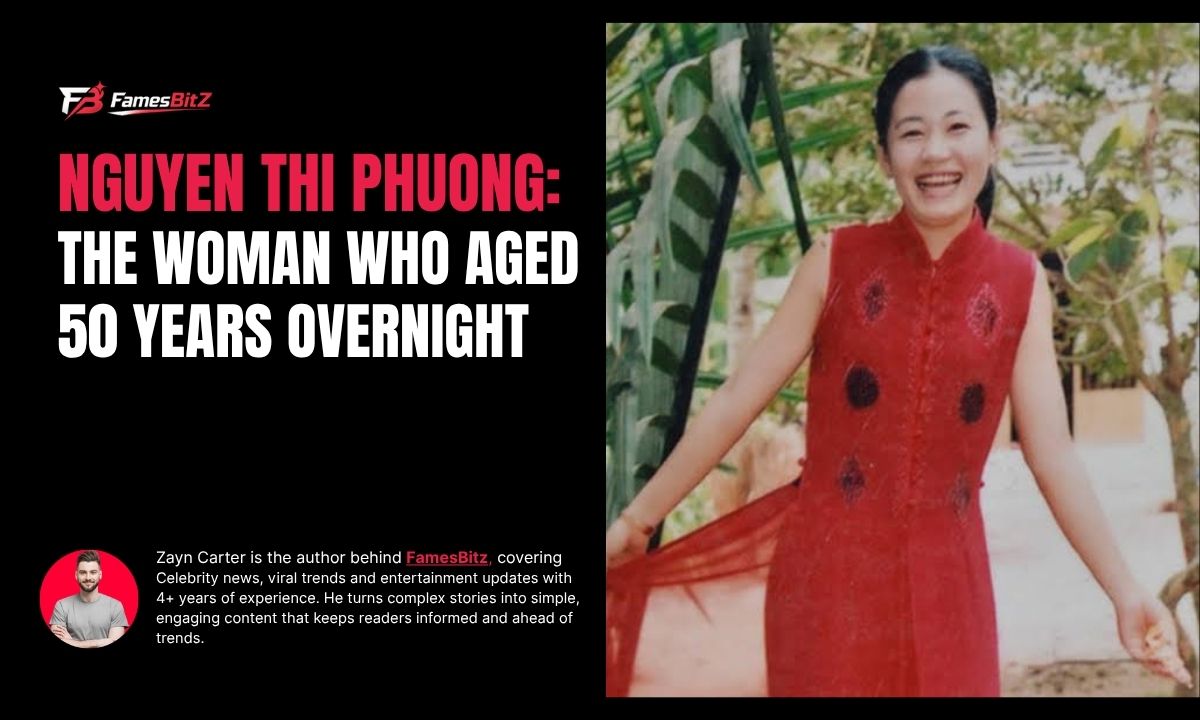
Nguyen Thi Phuong was a young Vietnamese woman whose story shocked the world. Her skin aged decades within a very short period of time. Doctors from multiple countries studied her rare and deeply unusual condition. Her case remains one of the most talked-about medical mysteries in modern history.
Her story began with something as ordinary as a seafood meal. A severe allergic reaction set off a chain of medical events no one could have predicted. The wrong treatment choices made her situation far worse over time. What followed changed her life and touched millions of hearts globally.
Even after her passing in 2015, the name Nguyen Thi Phuong still carries great weight. Her case continues to be referenced in dermatology and public health discussions. The combination of poverty, misdiagnosis, and rare disease made her story deeply human. Her husband’s loyalty through it all added a layer of love rarely seen in public life.
Who Is Nguyen Thi Phuong?
Nguyen Thi Phuong was born in the Giong Trom district of Ben Tre Province, Vietnam. She was 23 years old when her health began to decline dramatically in 2008. Before her illness, she lived a quiet and modest life with her husband. Nothing about her early years suggested what was about to unfold.
She worked at home while her husband, Nguyen Thanh Tuyen, earned money as a carpenter. They were a simple couple with very little money but genuine happiness. When her skin began to change, the couple had no financial means to seek proper hospital care. That lack of access to healthcare became a turning point in her entire story.
By the time global media discovered Nguyen Thi Phuong in late 2011, she was 26 years old. Her face and body looked like those of a woman in her seventies. Yet her voice, hair, teeth, and thinking remained completely normal for her age. She passed away on August 19, 2015, at just 30 years old, leaving behind a story the world never forgot.
See More: Sheletta Chapital
The Night That Changed Everything: How a Seafood Allergy Triggered Rapid Aging

In 2008, Nguyen Thi Phuong ate a seafood meal and suffered a serious reaction. Her entire body broke out in painful hives and relentless itching almost immediately. She had no prior history of severe allergies, so the episode came without warning. That single meal became the starting point of everything that followed.
Because hospital visits were financially out of reach, she turned to local pharmacy medicines. When those pills failed to stop the hives, she switched to traditional herbal remedies. The itching eventually stopped, and she believed the herbs had cured her completely. She had no idea that those same remedies were slowly destroying her skin from the inside.
After stopping the herbal medicines abruptly, her skin began to collapse at a shocking speed. Her face sagged, folded, and lost all its firmness within days. Friends and neighbors no longer recognized the young woman they once knew. The seafood allergy had not aged her, but the treatment she chose had started an irreversible chain reaction.
Inside the Medical Diagnosis: Did Nguyen Thi Phuong Have Mastocytosis or Lipodystrophy?
When medical specialists examined Nguyen Thi Phuong in 2011, no one agreed on a single cause. Some doctors pointed to mastocytosis, a disorder involving abnormal mast cell growth in body tissue. Others argued the visible damage matched a condition called acquired cutis laxa more closely. The debate was intense and involved experts from Vietnam, the United States, and beyond.
Mastocytosis explained her chronic hives, severe stomach pain, and systemic inflammation quite well. Dr. Hoang Van Minh of Ho Chi Minh City officially recorded this as her primary diagnosis. However, mastocytosis alone could not explain the extreme skin sagging that defined her appearance. That part of the picture pointed directly toward a second and even rarer condition.
Acquired cutis laxa and lipodystrophy both involve the destruction of tissue beneath the skin’s surface. Biopsy results coordinated with Baylor University in Texas eventually confirmed cutis laxa as a contributing factor. She became only the second patient on record globally with this specific overlap of conditions. Both diseases appeared to have worked together, each making the other worse.
The Role of Steroids and Wrong Medications in Her Sudden Transformation
The herbal medicines Nguyen Thi Phuong took were not regulated or professionally prescribed. Many traditional remedies sold in rural Vietnamese markets contained hidden synthetic steroids. She unknowingly consumed high doses of corticosteroids like dexamethasone for several months. Her hives disappeared, giving her the false belief that the treatment was working well.
Long-term steroid use silently damaged her skin’s core proteins over that entire period. Collagen and elastin, the proteins responsible for keeping skin firm, were slowly suppressed. Her skin continued to exist on the surface but had lost all its internal structural support. The damage was invisible at first, hidden beneath temporary swelling caused by the steroids themselves.
When she finally stopped taking the herbs, the steroids left her system without warning. Her facial swelling dropped suddenly, revealing skin that had no strength left to hold its shape. This abrupt withdrawal triggered a response similar to Cushing’s syndrome, crashing her body’s hormonal balance. What looked like overnight aging was actually weeks of hidden damage finally becoming visible all at once.
Nguyen Thi Phuong Case Timeline
The story of Nguyen Thi Phuong unfolded across several painful years, starting in 2008. Each phase brought new medical challenges, deeper isolation, and growing international attention. Understanding the timeline helps explain how a seafood allergy eventually became a global medical case. The sequence of events also shows how poverty and lack of healthcare access shaped every decision.
Her husband stood beside her through every difficult stage of this long journey. From hiding behind masks to sitting in front of international cameras, she never faced it alone. Medical help arrived far too late to reverse the skin damage already done. Despite some treatment, her internal health continued to decline until she died in 2015.
The timeline of Nguyen Thi Phuong is not just a medical record but a human story. It shows what happens when a vulnerable person cannot access proper healthcare in time. It reflects the dangers of self-medication with unregulated or improperly labeled products. Her story stands as a permanent reminder of those dangers for communities across Southeast Asia.
Key Events in the Timeline:
- 2006 — Nguyen Thi Phuong married Nguyen Thanh Tuyen in Ben Tre Province, Vietnam.
- 2008 — Ate seafood and experienced a severe full-body allergic reaction with hives.
- Late 2008 — Took pharmacy pills, then switched to traditional herbal medicines that contained hidden steroids.
- 2009 — Stopped herbal medicines abruptly; skin collapsed within days, making her look 70 years old.
- 2009–2011 — Lived in isolation, wore masks in public, and rarely left home due to shame.
- October 2011 — Vietnamese media broke the story; it spread worldwide very quickly.
- Late 2011 — Free medical evaluation in Ho Chi Minh City; diagnosed with mastocytosis and cutis laxa.
- 2013 — Traveled to Russia with her husband for an international medical forum on aging.
- 2012–2014 — Slight cosmetic improvements from treatment, but internal organs continued deteriorating.
- August 19, 2015 — Passed away at 30 years old due to severe digestive and stomach complications.
A Husband’s Devotion: The Heartwarming Love Story Behind the Headlines
Behind every headline about Nguyen Thi Phuong was the quiet strength of one devoted man. Nguyen Thanh Tuyen, a carpenter with very little income, never once considered leaving his wife. When her face changed beyond recognition, his feelings for her did not change at all. He became her shield, her caregiver, and the one constant in a world that had turned upside down.
Their story spread across the world not just because of her illness but because of his loyalty. Reporters who visited their home were moved by how gently he treated her every day. He held her hand, spoke softly to her, and cared for her physical needs without complaint. His devotion felt rare and powerful at a time when superficial standards of beauty dominate so much of society.
In interviews, Tuyen said his love was never connected to her physical appearance. He married her as a person, not as a face, and that belief never wavered through years of hardship. When she passed away in 2015, he was right beside her at the very end. His story reminded people around the world what genuine commitment truly looks like in practice.
Staying Together Against All Odds: How True Love Survived a Medical Nightmare
Most people could not imagine watching a loved one transform so dramatically and so quickly. Tuyen watched his young wife become unrecognizable within just a few months of illness. He chose not to turn away or retreat but instead leaned closer into the relationship. That choice defined his character and made their love story one the world remembers today.
He worked longer hours as a carpenter to cover the cost of her ongoing medical care. He managed household needs, prepared her food, and stayed awake with her during sleepless nights. When her stomach problems made eating nearly impossible, he prepared gentle meals with great patience. No professional caregiver was involved — it was simply a husband caring for the woman he loved.
Their bond survived media attention, public stares, and the weight of daily medical struggles. After she died in 2015, Tuyen stepped away from public life entirely to grieve in private. He is still remembered across Vietnam as a symbol of marital faithfulness without condition. The couple’s story continues to inspire those who believe love must go deeper than physical appearance.
Confronting the Public Eye: The Psychological Toll of Viral Fame on Nguyen Thi Phuong
Nguyen Thi Phuong went from a private village life to global media coverage almost overnight. She did not seek fame and was deeply uncomfortable with the sudden public attention. Cameras captured her most vulnerable moments and broadcast them to millions of strangers worldwide. The experience left visible emotional scars alongside the physical ones already on her face.
She developed a serious fear of going outside without fully covering her face and body. Neighbors who once knew her as a young woman would stare or whisper when she passed by. The shame she felt was not about vanity but about losing control over how others saw her. She described feeling like a medical curiosity rather than a human being with feelings and dignity.
The guilt of being unable to work or raise children also weighed heavily on her daily. She watched her husband exhaust himself physically and financially to keep her alive and cared for. That emotional burden was something no medical treatment could address or reduce. Her psychological suffering ran parallel to her physical illness throughout the final years of her life.
Where is She Now? The Truth About Nguyen Thi Phuong Medical Legacy

Nguyen Thi Phuong is no longer alive. She passed away on August 19, 2015, at the age of thirty. Her death came after years of worsening stomach pain and an inability to process food properly. The internal complications of mastocytosis ultimately proved too severe for her body to survive.
Despite her passing, her medical case remains active and referenced in dermatology research globally. Her tissue samples were studied by specialists, including a team connected to Baylor University in Texas. She was only the second person in recorded adult medical history to show this rare combination of conditions. Medical institutions continue to use her documented case when training physicians in rare systemic skin disorders.
Her broader legacy in Vietnam centers on public health awareness about unregulated medicines. The Vietnamese Ministry of Health has referenced her story when warning communities about hidden steroids in traditional products. Her case appeared in Japanese and Russian medical broadcasts and was presented at a 2013 international forum. Even in death, Nguyen Thi Phuong continues to educate doctors, patients, and health authorities around the world.
See More: Kat Timpf
The Science Behind Rapid Aging: Can an Allergy Really Change Your Face Overnight?
A standard allergic reaction cannot biologically age a person or permanently damage skin on its own. What an allergy can do is trigger a systemic response in someone who has an underlying condition. In the case of Nguyen Thi Phuong, the allergy was simply the spark that ignited far deeper problems. The actual aging effect came from a combination of rare disease and toxic medication, not the allergy itself.
True biological aging affects the entire body slowly and uniformly over many decades. Her hair stayed dark, her teeth stayed healthy, and her mind remained completely sharp throughout her illness. Only her skin collapsed — and that collapse was structural, not cellular or genetic in nature. Her body did not grow old; the framework holding her skin in place was chemically dissolved.
Scientists explain this distinction by separating biological aging from dermatological deflation. When elastin and collagen disappear from the dermis, the outer skin continues growing with nothing to hold it. It then folds under its own weight, creating deep wrinkles and sagging that mimics extreme age. This is exactly what happened to Nguyen Thi Phuong, and it can occur at any age when the right harmful conditions are present.
Medical Examination: Doctors’ Theories on Nguyen Thi Phuong Rare Skin Condition
When doctors first examined Nguyen Thi Phuong in person, they were genuinely divided in their conclusions. Her skin presentation was so unusual that no single diagnosis seemed to explain everything fully. The combination of hives, gastrointestinal damage, and extreme skin sagging pointed in multiple directions at once. Multiple specialists across different countries contributed their assessments over several years of study.
The three primary theories that emerged were mastocytosis, acquired cutis laxa, and corticoid poisoning. Each theory explained certain symptoms but left others without a satisfying clinical explanation on its own. The eventual conclusion was that all three conditions overlapped and fed into each other simultaneously. That overlap made her case exceptionally rare and scientifically significant for the medical community worldwide.
Biopsy samples sent to international labs confirmed the presence of both mast cell infiltration and elastin destruction. Vietnamese dermatologists strongly supported the steroid poisoning theory based on her medication history. Together, these findings created a picture of a condition no textbook had previously described in this way. Her case changed how some researchers think about the intersection of immune disorders and connective tissue disease.
Cutis Laxa vs. Mastocytosis: The Dermatological Debate Around Her Case
The central medical debate around Nguyen Thi Phuong focused on two very different types of disease. Mastocytosis is a disorder of immune cells, while acquired cutis laxa is a disorder of tissue structure. Local Vietnamese doctors initially focused on mastocytosis because it explained her allergic and digestive symptoms. International dermatologists pushed back, saying mastocytosis alone could not produce that level of skin collapse.
Acquired cutis laxa causes a total breakdown of elastin fibers throughout the dermis layer of skin. Without those fibers, skin loses its ability to snap back or hold any tension at all. It continues to grow outward while simultaneously losing all internal support and firmness. The result is large, pendulous folds of skin that look decades older than the person’s actual biological age.
The final medical consensus described a destructive cascade where mastocytosis triggered cutis laxa. Mast cells flooded the dermal tissue, releasing inflammatory enzymes that dissolved the elastin fibers. The steroid medications she had taken then prevented any new collagen from being produced to replace what was lost. All three factors combined to create a skin collapse that no single diagnosis could have caused independently.
| Medical Feature | Mastocytosis | Acquired Cutis Laxa |
| Primary target | Mast cells in immune tissue | Elastin and collagen in the skin structure |
| Visible symptoms | Hives, lesions, red rashes, severe itching | Deep skin folds, sagging, loss of all firmness |
| Internal effects | Stomach pain, chronic diarrhea, inflammation | Possible laxity in organ walls |
| Diagnosis method | Elevated tryptase and mast cell biopsy | Absence of elastic fibers in the tissue sample |
Financial Struggles and the Global Funding Search for Her Medical Treatment
Nguyen Thi Phuong and her husband lived in genuine poverty throughout her entire illness. Tuyen’s income as a carpenter was never enough to cover the cost of specialized hospital care. The couple could not afford the initial allergy treatment that might have changed everything from the start. That financial barrier was the root cause of every medical decision that followed the seafood reaction.
When her story went viral in 2011, charitable attention and medical support began to reach her for the first time. Doctors in Ho Chi Minh City offered free evaluation and diagnostic testing after seeing her case in the news. International organizations and television crews also helped bring her condition to a wider audience. Some laser treatments and medications were provided through the attention her story received globally.
However, ongoing treatment for rare conditions like mastocytosis and cutis laxa requires sustained funding and resources. Rural families in Vietnam often have no health insurance or formal safety net to cover such costs. Her case highlighted serious gaps in healthcare access for low-income communities across Southeast Asia. For many observers, her story was not just medical but also a reflection of broader social inequality in global healthcare systems.
Real or Fake? Fact-Checking the Viral Story of the Vietnamese Woman Who Aged Fast
The story of Nguyen Thi Phuong is completely real and has been verified by multiple credible medical sources. Vietnamese news outlets, international dermatology teams, and hospital records all confirm the core facts of her case. What is exaggerated in many viral retellings is the phrase “aged overnight,” which implies a single sudden event. In reality, the visible transformation developed over several months following her decision to stop the herbal medicines.
She did not experience true biological aging at any point during her illness. That distinction matters because true aging affects the entire body, including organs, cognition, and cellular function at a deep level. Her internal biology remained that of a young woman right up until her gastrointestinal complications became fatal. The “aging” that viewers saw in photographs was a surface-level structural collapse, not a biological one.
Her Nguyen Thi Phuong allergy story was also frequently misrepresented as caused entirely by the seafood reaction alone. The seafood allergy was the trigger, but it was the months of steroid-laced herbal medicine that did the real damage. Abruptly stopping those medicines caused the visible collapse, not the allergy itself. Fact-checking her case requires separating the medical cause from the viral narrative that grew around it.
Similar Cases Worldwide: Other Documented Instances of Sudden Accelerated Aging
The case of Nguyen Thi Phuong is extraordinary but not completely without parallel in the medical world. A small number of other individuals have experienced similarly rapid and severe changes to their skin structure. These cases are spread across different countries and involve slightly different underlying causes. Each one adds to the body of knowledge doctors use to understand rare connective tissue disorders.
Another Vietnamese woman, Nguyen Thi Ngoc Mai, developed nearly identical skin changes around the same time in 2011. Her condition also traced back to childhood allergies, medication misuse, and progressive structural tissue loss. In the United Kingdom, a teenage girl named Zara Hartshorn developed deep facial wrinkles due to hereditary cutis laxa passed down from her mother. Her case showed that this condition can be inherited, not just acquired through illness or medication.
In China, a 28-year-old woman named Hu Juan experienced aggressive acquired cutis laxa following childbirth in 2014. Her facial and neck skin lost all elasticity within months, requiring intensive surgical procedures to address. Like Nguyen Thi Phuong, her internal organs remained healthy while only her skin structure deteriorated. These global cases confirm that rapid-aging skin conditions are rare but real, and each case teaches medicine something new about the human body.
See More: Ross Shimabuku
Nguyen Thi Phuong Age
Nguyen Thi Phuong was 23 years old when her condition first appeared following a seafood allergy in 2008. She was 26 when her story reached global news audiences in late 2011, though many reports incorrectly stated she was 23 at that time. She continued to live with her condition for several more years before her health declined fatally. She passed away on August 19, 2015, at the age of 30 years old.
Her case is often mislabeled online with incorrect ages attached to different stages of her story. The confusion arises because her illness began three years before the media discovered her situation. Despite being only 30 at the time of her death, she had lived through extraordinary physical and emotional challenges. Her short life carried more medical significance than most lives twice as long.
Complete Age and Timeline Table:
| Year | Age | Key Event |
| 2006 | 21 | Married Nguyen Thanh Tuyen in Ben Tre Province |
| 2008 | 23 | A seafood allergic reaction triggered the illness |
| 2009 | 24 | Skin collapsed after stopping the herbal medicines |
| 2011 | 26 | The story broke globally in the international media |
| 2013 | 28 | Traveled to Russia for an international medical forum |
| 2015 | 30 | Passed away on August 19 due to digestive failure |
Last Words
The story of Nguyen Thi Phuong is a reminder of how deeply poverty shapes health outcomes. A simple seafood allergy became a tragedy because proper care was never financially accessible to her. The wrong medicines, bought out of desperation and necessity, set off a chain of events she could not escape. Her suffering was as much a product of social inequality as it was of a rare disease.
She left behind more than a medical case study recorded in dermatology journals worldwide. She left behind a husband who loved her without condition, a community that mourned her deeply, and a global audience that never forgot her face. Her name continues to appear in discussions about healthcare access, steroid regulation, and rare skin conditions across Southeast Asia. Nguyen Thi Phuong deserved better, and her story ensures that others might receive the care she never could.
Frequently Asked Questions
What happened to Nguyen Thi Phuong?
She developed a rare skin condition after taking steroid-laced herbal medicines to treat a seafood allergy, causing her skin to collapse and sag dramatically, making her look decades older than her actual age.
How old was Nguyen Thi Phuong when her skin changed?
She was 23 years old in 2008 when the initial allergic reaction occurred, and around 24 when the skin collapse became visible after she stopped her medications.
Is the story of Nguyen Thi Phuong real or a hoax?
The story is completely real and verified by Vietnamese medical institutions, international dermatologists, and credible news sources across multiple countries.
What disease did Nguyen Thi Phuong have?
She was diagnosed with a rare overlap of mastocytosis and acquired cutis laxa, both worsened by prolonged exposure to hidden corticosteroids in unregulated herbal medicines.
What caused her skin to age so rapidly?
Her skin collapsed because corticosteroids in her herbal medicine destroyed her collagen and elastin, and when she stopped taking them suddenly, the hidden damage became immediately visible.
Did Nguyen Thi Phuong have children?
There is no verified record of her having children, and one of her documented emotional struggles was her inability to have a family due to her ongoing illness.
Where was Nguyen Thi Phuong from?
She was from the Giong Trom district in Ben Tre Province, located in southern Vietnam.
What was the Nguyen Thi Phuong allergy that started everything?
A severe allergic reaction to seafood caused intense hives across her entire body, which led to the self-medication process that ultimately destroyed her skin structure.
Who was her husband and did he stay with her?
Her husband was Nguyen Thanh Tuyen, a local carpenter, who remained devoted to her throughout the entire course of her illness and was by her side when she passed away.
When did Nguyen Thi Phuong die?
She passed away on August 19, 2015, at the age of 30, after years of internal complications including severe stomach pain and progressive digestive failure.

Zayn Carter is the author behind FamesBitz, covering celebrity news, viral trends and entertainment updates with 4+ years of experience. He turns complex stories into simple, engaging content that keeps readers informed and ahead of trends.