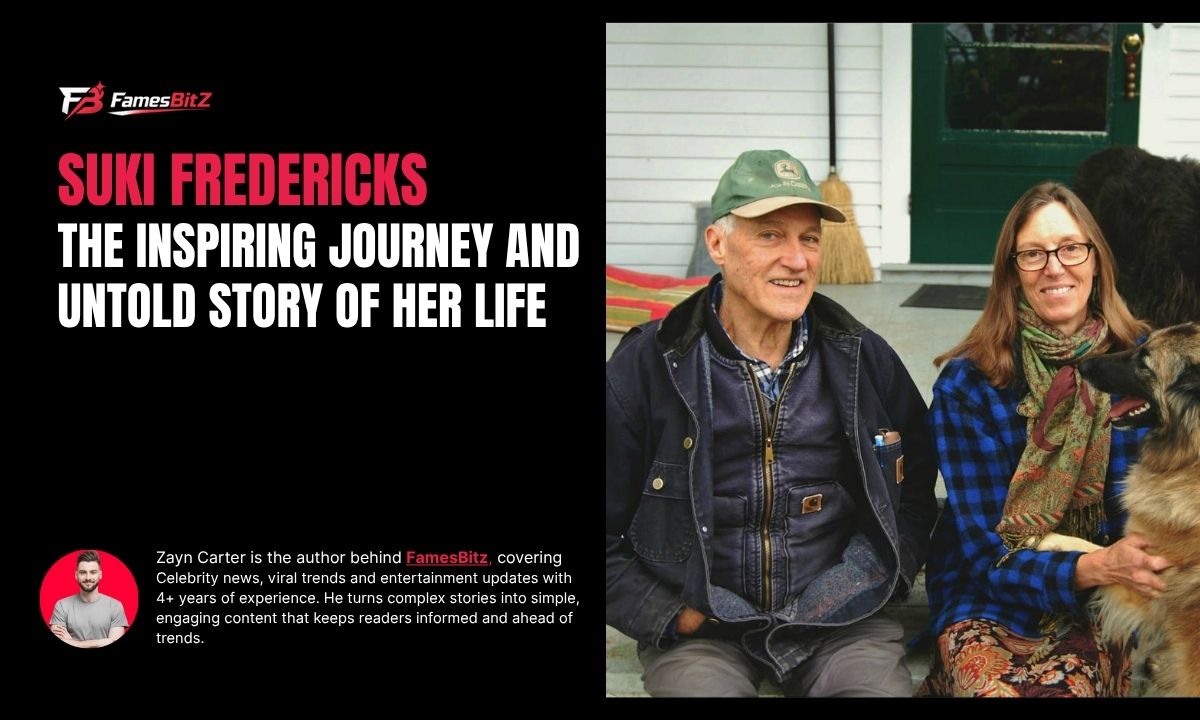
Suki Fredericks has built a remarkable career in the world of art conservation. She devoted decades of her life to preserving paintings and cultural heritage. Her story inspires everyone who values art, history, and quiet dedication.
From rural Vermont to prestigious museum partnerships, her journey stands out. Suki Fredericks proved that meaningful work speaks louder than public fame. Her passion for protecting art has left a lasting mark on the field.
Behind her professional achievements lies a deeply personal and grounded story. She balanced motherhood, farm life, and conservation work with great strength. Her life continues to inspire people both inside and outside the art world.
Who Is Suki Fredericks?
Suki Fredericks, born Suzanne Fredericks, is an American paintings conservator. She is the daughter of the celebrated sculptor Marshall Fredericks of Michigan. Her deep roots in art shaped the professional path she would later follow.
She is also widely known as the mother of gallery director Cooke Maroney. James Maroney and Suki Fredericks have built a life centered around the arts. Together, they moved to Vermont and created a meaningful life far from Manhattan.
Suki Fredericks Vermont life reflects her values of simplicity and dedication. She runs her own conservation studio while managing a historic farm estate. Her story proves that real success is built through passion and consistent effort.
Suki Fredericks Quick Bio
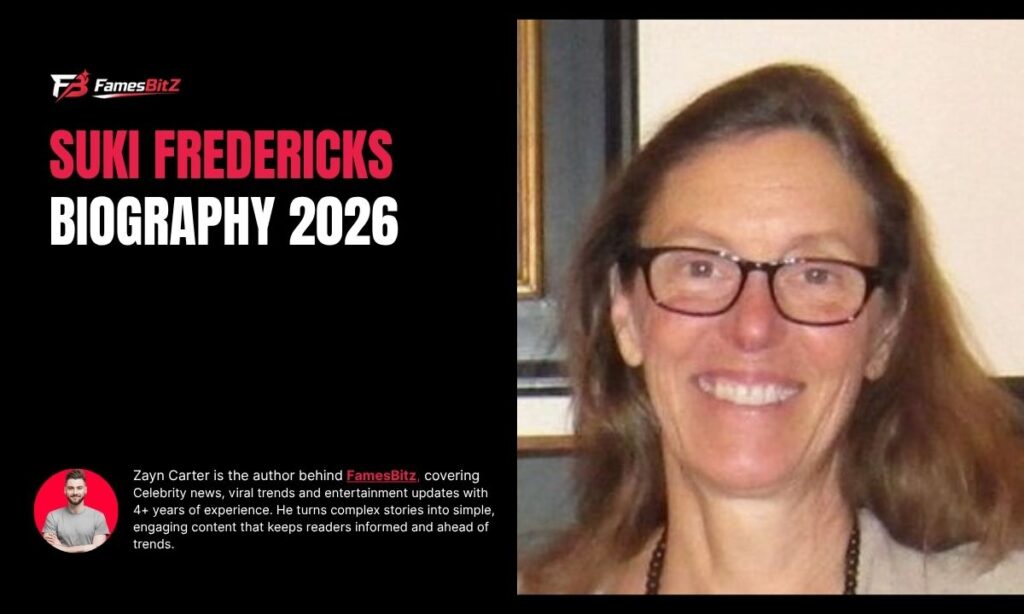
| Detail | Information |
| Full Name | Suzanne “Suki” Fredericks |
| Date of Birth | Estimated early 1950s |
| Nationality | American |
| Profession | Paintings Conservator and Restorer |
| Education | M.A. Art History, Certificate in Conservation, NYU Institute of Fine Arts |
| Father | Marshall Fredericks (Sculptor) |
| Mother | Rosalind Bell Cooke |
| Spouse | James Maroney (Former Christie’s SVP, Art Dealer) |
| Children | Cooke Maroney, Annabelle Maroney |
| Son’s Spouse | Jennifer Lawrence (Actress) |
| Grandchildren | Cy Maroney (2022), Second child (March 2025) |
| Studio | Oliver Hill Paintings Conservation |
| Location | Leicester, Vermont, USA |
| Career Start | 1976 |
| Key Affiliation | American Institute for Conservation (AIC) – Professional Associate |
| Museum Partner | Shelburne Museum (since 1998) |
| Farm | Oliver Hill Farm (750 acres, Bed and Breakfast) |
See More: Paula Feiten
Suki Fredericks Age And Physical Stats

Suki Fredericks keeps her personal life very private and away from the media. Her exact birth date has never been officially shared or confirmed publicly. Based on career timelines, she is estimated to be in her early to mid-seventies.
Her physical appearance reflects decades of active outdoor and hands-on work. She is described as having silver-blonde hair and a lean, healthy build. Family photographs suggest she carries herself with calm and quiet confidence.
Here is a detailed overview of Suki Fredericks’ known physical stats:
| Detail | Information |
| Estimated Age | Early to mid-70s (as of 2026) |
| Height | Approximately 5 feet 5 inches (165 cm) |
| Eye Color | Blue/Gray |
| Hair Color | Silver-Blonde |
| Build | Lean and fit |
| Lifestyle | Active farming and studio conservation work |
Suki Fredericks Early Life and Artistic Foundation
Suki Fredericks grew up in a family deeply rooted in creative achievement. Her father, Marshall Fredericks, was one of America’s most respected sculptors. Growing up around great art naturally shaped her passion for preservation early on.
As a child, she developed a strong curiosity about paintings and their history. She spent time studying how artworks aged and how they could be carefully saved. This early interest laid the groundwork for her entire professional career path.
Her childhood exposure to museums and galleries deepened her artistic understanding. Mentors and her family environment encouraged her to pursue formal conservation training. Suki Fredericks carried those formative lessons throughout her decades-long career.
Suki Fredericks Educational Path
Suki Fredericks pursued a rigorous academic path to enter the conservation field. She studied art history to understand the cultural context behind historical paintings. This knowledge became the foundation for every restoration decision she later made.
She then attended the NYU Institute of Fine Arts for advanced conservation training. There, she earned both a Master’s degree in Art History and a Conservation Certificate. Hands-on internships gave her the technical skills needed for professional studio work.
| Education Detail | Information |
| Undergraduate Focus | Art History |
| Graduate School | NYU Institute of Fine Arts |
| Degree Earned | M.A. in Art History |
| Certification | Certificate in Conservation |
| Training Type | An academic study combined with practical internships |
| Professional Credential | AIC Professional Associate |
Suki Fredericks Career in Art Conservation
Suki Fredericks began her conservation career professionally in the year 1976. She has since worked across museums, private collections, and non-profit organizations. Her studio, Oliver Hill Paintings Conservation, serves clients throughout the Northeast.
Her restoration techniques include paint consolidation, tear repairs, and varnish reduction. She is especially skilled in conserving American folk art and historic theater curtains. Cooke Maroney Suki Fredericks grew up surrounded by this dedicated professional environment.
Since 1998, she has maintained a long-term partnership with the Shelburne Museum. She also works with the Marsh-Billings-Rockefeller National Historical Park regularly. Her career reflects nearly five decades of consistent excellence and professional respect.
Suki Fredericks and Vermont
In 1986, Suki Fredericks and her husband left Manhattan for rural Vermont. They sought a quieter environment to raise their young family away from the city. The move marked a major turning point in both their personal and professional lives.
Suki Fredericks Vermont journey was not without its challenges and adjustments. Managing a large agricultural property required skills far beyond their expectations. Yet she successfully integrated into Vermont’s arts and cultural communities with ease.
She became an active contributor to regional preservation efforts throughout the state. Her involvement in the Vermont Historic Theater Curtain Project became particularly notable. Vermont gave Suki Fredericks a new home where her conservation work continued to grow.
Suki Fredericks Marriage and Partnership
James Maroney and Suki Fredericks share a life built on art and mutual dedication. James was a senior vice president and head of American Paintings at Christie’s. Their combined expertise in art made them a deeply complementary and respected pair.
Their marriage brought together two professionals with different but related art skills. James focused on the market value of art while Suki concentrated on its physical care. Together, they represented a full picture of how art is valued and preserved over time.
The couple navigated the transition from Manhattan life to Vermont farming together. They supported each other through every challenge that rural living brought their way. Their partnership remains one of the most grounding aspects of Suki Fredericks’ life.
Suki Fredericks Life on the Farm
In 1990, Suki and James opened Oliver Hill Farm in Leicester, Vermont. The property spans 750 acres and once operated as a large dairy farm. At its peak, the farm housed 250 cows, including 125 active milking cows.
Managing such a large farm required enormous energy and practical daily effort. The couple went through a three-year organic certification process on the property. They eventually transitioned to leasing land to local neighboring organic farmers.
Suki Fredericks Motherhood and Family Values
Suki Fredericks chose Vermont partly to give her children a better upbringing. She wanted to raise her son Cooke in a calm, nature-centered environment. Her decision reflected a deep commitment to hands-on and present parenting.
She later raised both Cooke and her daughter Annabelle on the Vermont farm. Suki balanced her conservation career alongside an active and devoted family life. Her children grew up with a strong appreciation for art, nature, and hard work.
Cooke Maroney and Suki Fredericks
Cooke Maroney was born on July 3, 1984, to James Maroney and Suki Fredericks. He grew up surrounded by art conservation, farm life, and cultural discussions. That unique upbringing helped shape his path into the contemporary art world.
Cooke Maroney Suki Fredericks share a deep bond rooted in artistic passion. He studied art history at NYU and became the director of Gladstone Gallery. While his mother preserves historical art, Cooke champions contemporary artists today.
Suki Fredericks Connection to Jennifer Lawrence
Suki Fredericks became Jennifer Lawrence’s mother-in-law in October of 2019. Cooke and Jennifer married at the Belcourt of Newport mansion in Rhode Island. The marriage connected a quiet Vermont conservator to Hollywood’s biggest spotlight.
The family welcomed a son named Cy in February 2022 and another child in 2025. Despite the celebrity connection, the family has stayed grounded and very private. Jennifer Lawrence has praised Cooke’s family values and their low-key Vermont lifestyle.
Suki Fredericks Professional Ethics and Work Style
Suki Fredericks approaches every artwork with careful research and deep respect. She studies the original materials and techniques before beginning any restoration. Her ethical standards ensure that each artwork remains authentic and properly documented.
She believes conservation is about connecting communities with their shared cultural history. Her work goes beyond technical skill to include education and meaningful public engagement. Suki Fredericks treats every painting as a cultural story worth protecting for the future.
- She applies the principle of minimal intervention to every conservation treatment she performs.
- All her treatments are fully reversible, ensuring future conservators can make different choices.
- She documents every step of her work with thorough written and photographic records.
Suki Fredericks Influence on the Art Community
Suki Fredericks has contributed significantly to Vermont’s regional conservation landscape. Her work on the Vermont Historic Theater Curtain Project stands as a key achievement. That project helped Vermont’s hand-painted curtains earn National Treasure recognition status.
She also collaborates with Curtains Without Borders to protect community cultural artifacts. Her involvement extends beyond individual paintings to broader state preservation initiatives. Through these efforts, Suki Fredericks has helped build a stronger Vermont arts community.
Suki Fredericks Public Recognition and Media Attention
For most of her career, Suki Fredericks remained respected but publicly very quiet. Her recognition came through institutional partnerships rather than any public fame. Museums and conservation circles knew her name long before the general public did.
Her visibility grew significantly after Cooke married Jennifer Lawrence in 2019. Media coverage of the wedding introduced Suki to a much wider global audience. Yet she has continued to live privately and focus entirely on her conservation work.
Legacy and Long-Term Impact
- Her nearly five decades of conservation work have preserved countless irreplaceable regional artworks.
- She helped Vermont’s historic hand-painted stage curtains earn National Treasure status from the National Trust for Historic Preservation.
- She established Oliver Hill Paintings Conservation as a trusted studio for museums and private collectors.
- Her mentorship has trained an entire generation of young Vermont-based conservation professionals.
- She serves on institutional boards, including the Henry Sheldon Museum and the Marshall M. Fredericks Sculpture Museum.
See More: Albert Manzo III
Suki Fredericks and Professional Reputation
Suki Fredericks has earned strong respect through decades of careful and ethical work. Institutions across the Northeast trust her with their most fragile and valuable collections. Her reputation is built entirely on the quality and integrity of her finished work.
Colleagues admire her calm and precise approach to even the most complex challenges. She is known for minimal intervention, thorough documentation, and full treatment reversibility. Her professional standing reflects a lifetime of quiet but deeply impactful dedication.
Respect in the Conservation Field
Respect in conservation is earned through consistent skill and transparent practice. Conservators who document their work honestly build lasting trust with institutions. Suki Fredericks has demonstrated these qualities throughout her entire professional life.
Her membership in AIC, ICOM, AAM, NECA, and WAAC reflects her professional standing. Peers view her not just as a skilled technician but as a genuine field leader. Her career shows that integrity and excellence are the foundations of lasting respect.
Suki Fredericks Daily Work and Responsibilities
Each day, Suki Fredericks begins by carefully examining the condition of artworks. She identifies problems such as cracked paint, canvas tears, or surface discoloration. Every observation is recorded thoroughly before any physical treatment begins.
Her hands-on work includes surface cleaning, paint stabilization, and careful retouching. She uses specialized tools and proven conservation materials for every procedure. Environmental controls for light, humidity, and temperature are also a daily concern.
What Her Job Looks Like
Suki Fredericks studies each painting’s materials, age, and previous repair history. This analysis guides every decision she makes throughout the conservation process. No two artworks present the same challenges, so each case requires fresh evaluation.
She then applies precise restoration techniques using specialized professional tools. Her goal is always to protect the artist’s original vision without adding unnecessary changes. Every completed treatment is followed by full documentation for future reference.
The Lasting Work of Suki Fredericks
The lasting impact of Suki Fredericks is visible in every artwork she has created. She has ensured that fragile and aged paintings remain accessible to future generations. Her careful work bridges the gap between distant history and present-day audiences.
Beyond individual artworks, her legacy lives on through the conservators she mentored. The professional standards she upholds continue to shape regional conservation practices. Her influence extends far beyond her studio and into the broader art preservation world.
- She has preserved folk art collections at the Shelburne Museum for over two decades.
- Her work helped document and restore Vermont’s rare hand-painted historic theater curtains.
- She trained conservation technicians who have since become independent painting conservators.
- Her ethical approach has set a regional benchmark for conservation standards in New England.
Why These Stories Are Important Today
The artworks Suki Fredericks preserves carry stories from generations long passed. Each painting connects today’s audiences to historical experiences and cultural memories. Without conservation, these stories would gradually fade and disappear forever.
Preserved artworks also serve as powerful tools for education and creative inspiration. Students, historians, and artists all benefit from having access to well-maintained works. Suki Fredericks ensures that these resources remain available for everyone who needs them.
Suki Fredericks Challenges in Art Conservation
- Natural aging causes pigments, canvas, and wood panels to break down gradually over time.
- Environmental factors like humidity shifts, light exposure, and temperature changes accelerate irreversible artwork damage.
- Balancing necessary restoration with respecting the original artist’s intent requires complex ethical decision-making.
- Every artwork presents unique material challenges that require individualized research and custom treatment planning.
- Securing consistent funding and institutional support for long-term conservation projects remains an ongoing challenge.
Protecting Art from Time
Preventing art deterioration requires carefully controlled storage and display environments. Conservators monitor light levels, humidity, and temperature to slow natural material breakdown. Suki Fredericks applies these protective measures consistently in all her institutional work.
When visible damage occurs, she uses tested techniques to repair and stabilize the artwork. Her goal is always to stop further loss while preserving as much original material as possible. This careful approach ensures the artwork survives in its most authentic form going forward.
Suki Fredericks Net Worth In 2026
Suki Fredericks does not have a publicly verified individual net worth on record. She lives privately in Vermont and works in a highly specialized academic field. Major wealth registries do not track her personal finances or individual asset values.
However, her family’s collective financial position is considered quite substantial overall. Her husband, James Maroney, built a prominent career as a top Christie’s art dealer. Oliver Hill Farm itself represents a significant real estate and heritage asset in Vermont.
Here is a financial overview of the Suki Fredericks family in 2026:
| Person | Estimated Net Worth | Source of Wealth |
| Suki Fredericks | Not publicly disclosed | Art conservation, farm ownership |
| James Maroney | Not publicly disclosed | Art dealing, Christie’s career |
| Cooke Maroney (Son) | Approx. $25 million | Gallery direction, art industry |
| Jennifer Lawrence (Daughter-in-law) | Approx. $160 million | Acting, film productions |
| Oliver Hill Farm | Significant real estate value | 750-acre Vermont organic estate |
Suki Fredericks as a Mentor
Suki Fredericks has guided many young professionals entering the conservation field. She shares her experience with patience, clarity, and genuine care for their growth. Her mentorship style focuses on building both technical skill and professional responsibility.
She teaches conservators to approach every artwork with respect and careful attention. Her guidance emphasizes the importance of documentation, ethics, and lifelong learning. Many of her former mentees have gone on to build strong, independent conservation careers.
Supporting Young Professionals
Suki Fredericks actively supports newcomers through hands-on training and direct guidance. She believes that real-world experience is essential for developing strong conservation skills. Young professionals leave her studio better prepared to handle complex restoration challenges.
She also connects emerging conservators with institutional partners and professional networks. Her support extends beyond technique to include professional ethics and field responsibility. Through this ongoing work, Suki Fredericks continues to strengthen the next conservation generation.
Cultural Importance of Her Work
Suki Fredericks protects artworks that carry deep historical and community cultural meaning. Her conservation work ensures that museums can share these treasures with visiting audiences. Every restored painting represents a preserved moment in regional and national history.
Her contributions help communities stay connected to their artistic and cultural heritage. Without her careful work, many important artworks would deteriorate beyond recovery quickly. Suki Fredericks makes history tangible and accessible through every painting she restores.
Preserving History Through Art
Each painting Suki Fredericks treats holds a unique story from a specific historical period. Her restoration work maintains that story in its most authentic and visible form. Through her care, centuries-old paintings continue to communicate with modern audiences.
Her approach ensures that original materials and artistic intent are always fully respected. No unnecessary changes are made that could alter how a painting reads historically. This commitment to authenticity makes her work genuinely valuable to future generations.
The Path of a Conservator
Becoming a conservator requires years of specialized academic and hands-on training. Suki Fredericks began with formal study in art history and material science foundations. Her NYU education gave her the technical tools to work on complex historical paintings.
Career growth in conservation comes through mentorship, experience, and institutional trust. She built her reputation gradually through careful work and consistent professional integrity. Her path shows that patience and dedication are the true marks of a great conservator.
The Conservation Community Around Her
Suki Fredericks is an active and respected member of Vermont’s conservation community. She participates in conferences, professional associations, and collaborative institutional projects. Her willingness to share knowledge has made her a valued colleague across the region.
Conservation often involves teams of specialists working together on complex restoration challenges. Suki Fredericks brings both expertise and a collaborative spirit to every shared project. Her community engagement reinforces the shared mission of protecting cultural heritage responsibly.
Why Conservation Matters in Vermont
Vermont holds a rich collection of historic artworks that reflect its unique regional identity. Many of these works are found in small museums, town halls, and private collections statewide. Without proper conservation, these cultural treasures would deteriorate and eventually be lost.
Conservation work in Vermont also supports local education, heritage tourism, and civic pride. Restored artworks displayed in public spaces allow communities to engage with their own history. Suki Fredericks Vermont-based work ensures these cultural assets remain protected for future generations.
See More: Jeremy Fragrance Net Worth
Suki Fredericks Now Today In 2026
In 2026, Suki Fredericks continues to operate her conservation studio in Vermont actively. She provides specialized services to museums, private collectors, and heritage organizations. Her work with the Shelburne Museum and Curtains Without Borders remains ongoing and valued.
She balances her professional work with life at Oliver Hill Farm and her family role. The farm now operates as a bed-and-breakfast and registered organic estate in Leicester. Suki Fredericks remains a private, purposeful, and deeply respected figure in her field.
Last Words
Suki Fredericks has lived a life guided by passion, purpose, and quiet dedication. From her artistic family roots to five decades of conservation work, her path inspires. Her story reminds us that meaningful impact rarely requires fame or public attention.
Her legacy continues to grow through the artworks she preserved and the lives she shaped. James Maroney and Suki Fredericks built something rare — a life where art truly matters. She stands as a genuine example of how professional excellence and personal values align.
Frequently Asked Questions
Who is Suki Fredericks?
Suki Fredericks is an American paintings conservator based in Leicester, Vermont. She is the daughter of sculptor Marshall Fredericks and the mother-in-law of actress Jennifer Lawrence.
What is Suki Fredericks known for?
She is widely known for her long career in art restoration and her work with the Shelburne Museum. She is also recognized as Cooke Maroney’s mother and Jennifer Lawrence’s mother-in-law.
Where does Suki Fredericks live?
Suki Fredericks Vermont home is at Oliver Hill Farm in Leicester, which she co-owns with her husband James Maroney.
Who is James Maroney and Suki Fredericks?
James Maroney and Suki Fredericks are a married couple deeply connected to the art world. James was a former senior vice president at Christie’s and a prominent Manhattan art dealer.
Who is Cooke Maroney Suki Fredericks son?
Cooke Maroney is the son of Suki Fredericks and James Maroney, born in New York City in 1984. He is the director of Gladstone Gallery and the husband of actress Jennifer Lawrence.
How long has Suki Fredericks worked in conservation?
Suki Fredericks has been a professional paintings conservator since 1976, giving her nearly five decades of experience in art restoration and preservation.
What is Oliver Hill Farm?
Oliver Hill Farm is a 750-acre estate in Leicester, Vermont owned by Suki and James Maroney. It operates today as a registered organic property and a charming bed-and-breakfast.
What is Suki Fredericks educational background?
She earned a Master’s degree in Art History and a Certificate in Conservation from the NYU Institute of Fine Arts. She is also a Professional Associate of the American Institute for Conservation.
Does Suki Fredericks have grandchildren?
Yes, Suki Fredericks became a grandmother when Cooke and Jennifer Lawrence welcomed their son Cy in 2022 and a second child in March 2025.
What is Suki Fredericks doing in 2026?
In 2026, Suki Fredericks continues running her conservation studio and managing Oliver Hill Farm. She remains active in Vermont’s arts community and serves on several museum advisory boards.

Zayn Carter is the author behind FamesBitz, covering celebrity news, viral trends and entertainment updates with 4+ years of experience. He turns complex stories into simple, engaging content that keeps readers informed and ahead of trends.